Sunday, November 30, 2025

As US hunger rises, Trump administration’s ‘efficiency’ goals cause massive food waste by Tevis Garrett Graddy-Lovelace

 The U.S. government has caused massive food waste during President Donald Trump’s second term. Policies such as immigration raids, tariff changes and temporary and permanent cuts to food assistance programs have left farmers short of workers and money, food rotting in fields and warehouses, and millions of Americans hungry. And that doesn’t even include the administration’s actual destruction of edible food.

The U.S. government estimates that more than 47 million people in America don’t have enough food to eat – even with federal and state governments spending hundreds of billions of dollars a year on programs to help them.

Yet, huge amounts of food – on average in the U.S., as much as 40% of it – rots before being eaten. That amount is equivalent to 120 billion meals a year: more than twice as many meals as would be needed to feed those 47 million hungry Americans three times a day for an entire year. 


This colossal waste has enormous economic costs and renders useless all the water and resources used to grow the food. In addition, as it rots, the wasted food emits in the U.S. alone over 4 million metric tons of methane – a heat-trapping greenhouse gas.

As a scholar of wasted food, I have watched this problem worsen since Trump began his second term in January 2025. Despite this administration’s claim of streamlining the government to make its operations more efficient, a range of recent federal policies have, in fact, exacerbated food wastage. 

 Immigration policy

Supplying fresh foods, such as fruits, vegetables and dairy, requires skilled workers on tight timelines to ensure ripeness, freshness and high quality


The Trump administration’s widespread efforts to arrest and deport immigrants have sent Immigration and Customs Enforcement, the Border Patrol and other agencies into hundreds of agricultural fields, meat processing plants and food production and distribution sites. Supported by billions of taxpayer dollars, they have arrested thousands of food workers and farmworkers – with lethal consequences at times.

Dozens of raids have not only violated immigrants’ human rights and torn families apart: They have jeopardized the national food supply. Farmworkers already work physically hard jobs for low wages. In legitimate fear for their lives and liberty, reports indicate that in some places 70% of people harvesting, processing and distributing food stopped showing up to work by mid-2025.

News reports have identified many instances where crops have been left to rot in abandoned fields. Even the U.S. Department of Labor declared in October 2025 that aggressive farm raids drive farmworkers into hiding, leave substantial amounts of food unharvested and thus pose a “risk of supply shock-induced food shortages.”


Foreign aid cuts

When the Trump administration all but shut down the U.S. Agency for International Development in early 2025, the agency had 500 tons of ready-to-eat, high-energy biscuits worth US$800,000, stored to distribute to starving people around the world who had been displaced by violence or natural disasters. With no staff to distribute the biscuits, they expired while sitting in a warehouse in Dubai.

Incinerating the out-of-date biscuits reportedly cost an additional $125,000

 An additional 70,000 tons of USAID food aid may also have been destroyed.

Tariffs

In the late 20th century, as globalized trade patterns grew, U.S. farmers struggled with agricultural prices below their production costs. Yet tariffs in the first Trump administration did not protect small farms.

 And the tariffs imposed in early 2025, after Trump regained the White House, severed U.S. soybean trade with China for months. Meanwhile, there’s nowhere to store the mountains of soybeans. An October 2025 agreement may resume some activity, but at lower price levels and a slower pace than before, as China looks to Brazil and Argentina to meet its vast demand.

Though the soybeans were intended to feed the Chinese pig industry, not humans, the specter of waste looms both in terms of the potential spoilage of soybeans and the actual human food that could have been grown in their place.


Other efforts lead to more waste

Since taking office, the second Trump administration has taken many steps aimed at efficiency that actually boosted food waste. Mass firings of food safety personnel risks even more outbreaks of foodborne diseases, tainted imports, and agricultural pathogens – which can erupt into crises requiring mass destruction, for instance, of nearly 35,000 turkeys with bird flu in Utah.

In addition, the administration canceled a popular program that helped schools and food banks buy food from local farmers, though many of the crops had already been planted when the cancellation announcement was made. That food had to find new buyers or risk being wasted, too. And the farmers were unable to count on a key revenue source to keep their farms afloat.


Also, the administration slashed funding for the Federal Emergency Management Agency that helped food producers, restaurants and households recover from disasters – including restoring power to food-storage refrigeration.

The fall 2025 government shutdown left the government’s major food aid program, SNAP, in limbo for weeks, derailing communities’ ability to meet their basic needs. Grocers, who benefit substantially from SNAP funds, announced discounts for SNAP recipients – to help them afford food and to keep food supplies moving before they rotted. The Department of Agriculture ordered them not to, saying SNAP customers must pay the same prices as other customers.

Food waste did not start with the Trump administration. But the administration’s policies – though they claim to be seeking efficiency – have compounded voluminous waste at a time of growing need. This Thanksgiving, think about wasted food – as a problem, and as a symptom of larger problems.


Wednesday, November 26, 2025

How a 'sweet and shy' tortoise outlived empires and survived two world wars by Scott Neuman


No one knows exactly when Gramma the Galápagos tortoise was born on that volcanic chain of Pacific islands. What is clear, though, is that she lived through the fall of empires, two world wars, and the tenure of more than 20 U.S. presidents. If the estimated birth year of 1884 is accurate, Chester Arthur occupied the Oval Office and there were only 39 states at the time.

It was also the year the Washington Monument was finished, the Statue of Liberty's pedestal cornerstone was set, and the first edition of the Oxford English Dictionary appeared. Queen Victoria still ruled Britain. A line running through Greenwich, England, was established as the prime meridian — the zero degree longitude mark that regularized nautical charts and time zones.


Gramma, who lived for a century at the San Diego Zoo, died Thursday at 141 — give or take, "with her family of wildlife care specialists by her side," the zoo said in a statement to NPR. "She was being expertly supported for ongoing conditions related to her age, and wildlife health and care teams made the difficult and compassionate decision to say goodbye."

Gramma was a fixture and a favorite at the zoo after arriving there circa 1928 from the Bronx Zoo in New York after being taken from the Galápagos.


It seems as though Gramma was largely oblivious to the tumultuous times in which she lived. That may be a key to her longevity, according to Steven Austad, a biology professor at the University of Alabama at Birmingham.

"They live very slow lives," says Austad, the author of Methuselah's Zoo: What Nature Can Teach Us About Living Longer, Healthier Lives. "As biological processes cause the damage that makes all species age, that slow process leads to long life."

How long is long? For comparison, NPR reported on the death of a Galápagos tortoise in 2011 at Reptile Gardens in Rapid City, S.D., at the age of around 130 and one named Lonesome George in the Galápagos who died at "well over 100 years old" in 2012. In 2015, "Speed" died at the San Diego Zoo at about 150. We also reported on the 135th birthday (and first Father's Day) for Goliath at Zoo Miami earlier this year.


"You can boil it down to 'drive fast, die young' or 'grow old with grace,' " says Stephen Blake, an assistant professor of biology at Saint Louis University who has studied the giant tortoises, which he says "are definitely kind of Prius drivers."

He says their bodies possess a unique ability to effect a "physiological oil change" that helps them clean toxic compounds that build up over time.

A few years ago, during a "shellabration" of Gramma's 138th birthday, the zoo put out this video.

 Gramma was described as "the Queen of the Zoo" and a "sweet and shy tortoise," according to the zoo's statement. "[She] quietly touched the lives of countless people over nearly a century in San Diego as an incredible ambassador for reptile conservation worldwide."


Galápagos tortoises are believed to have arrived in the islands by water from the South American mainland, Blake says. "They've got a long neck … that can be used like a snorkel. They're buoyant and they're stable because they're sort of bell shaped," he says. "Once at sea … they can survive a long oceanic voyage, which probably took six weeks or something like that to get from the South American mainland to Galápagos."

He says that geneticists believe the entire population in the Galápagos originates from a single female who reached the island chain about 2 million to 3 million years ago. "Giant tortoises — females can store sperm for up to about seven years," Blake says.

Male Galápagos tortoises can weigh more than 500 pounds, with females about half that size. The males can reach 6 feet in length. However, Blake notes that "the jury's out" on whether Galápagos tortoises are truly oversized in an evolutionary sense because the South American mainland once hosted species that were larger.

There are 15 subspecies of Galápagos tortoises in the islands, three of which are considered extinct.


Gramma was born just a few years after Charles Darwin died, but her parents and the famed scientist could theoretically have crossed paths during Darwin's visit to the islands on the HMS Beagle in 1835, Blake says.

"It's highly probable that there are tortoises alive that were on the Galápagos when Darwin was there. Whether they saw him, who knows," he says.


With Grokipedia, Top-Down Control of Knowledge Is New Again by Ryan McGrady


Grokipedia, the AI-generated encyclopedia owned by Elon Musk's xAI, went live on October 27. It is positioned as, first and foremost, an ideological foil to Wikipedia, which for years has been the subject of escalating criticism by right-wing media in general and Musk in particular. With Grokipedia, Musk wants to produce something he sees as more neutral.

Much has already been written about the character of Grokipedia’s content. This essay aims to explore the nature of the project and its version of neutrality, as compared to Wikipedia. Technologically, it is one of many experiments designed to replace human-generated writing with LLMs; conceptually, it is less a successor to Wikipedia than a return to an older model of producing officially sanctioned knowledge.

Wikipedia and neutrality

Nearly every encyclopedia asserts some version of "neutrality." Wikipedia's definition is unusual: its "neutral point of view" policy aims not to pursue some Platonic ideal of balance or objectivity, but rather a faithful and proportional summary of what the best available sources say about a subject. Original ideas, reporting, and analysis on the part of its contributors are not allowed. Casting volunteers as "editors" and not "authors" is part of how "an encyclopedia that anyone can edit" is possible — by moving the locus of dispute from truth itself to which sources to use and how to incorporate them. As with the rest of Wikipedia, neutrality is less a perfect state than a continuously negotiated process wherein disputes are expected and common. While neutrality and sourcing discussions are often deeply fraught, with complicated histories that blur lines of reliability and result in lengthy discussions, they're also constructive — a 2019 study in Nature found that articles with many such conflicts tended to be higher quality in general.


On which sources to use, Wikipedia's guideline about identifying "reliable sources" details its priorities: a reputation for fact-checking, accuracy, issuing corrections, editorial oversight, separating facts and opinions, no compromising connection to the subject, and other traditional markers of information literacy that librarians have taught to students and researchers for more than a century. Secondary and tertiary sources are preferred, deferring to them for the task of vetting and interpreting primary sources. Independent subjects are also preferred for any non-trivial claim, as article subjects have a hard time writing about themselves objectively. Ideological orientation is not a factor except insofar as narrative drive affects this list of priorities. Both of the following statements can align with Wikipedia's definition of a "reliable source," even though they're opposed: "unicorns aren't real but I wish they were;" "unicorns aren't real and I'm glad they aren't." Either source would take priority over a source that claims "unicorns are real," regardless of the author's pro- or anti-unicorn sentiment.

Primarying Wikipedia

However, sourcing is also at the center, implicitly or explicitly, of many allegations that Wikipedia is not actually neutral. Some of these claims focus on Wikipedia's "perennial sources list," which includes dozens of sources whose reliability is frequently discussed, highlighted according to the outcomes of those discussions. The idea is to be able to point to a central page where someone can find links and summaries of past discussions rather than have volunteers explain for the umpteenth time why e.g. InfoWars is not a reliable source.

I agree with criticism of this page to the extent it has given rise to a genre of source classification discussion applied not just to extreme cases like InfoWars but to sources that require some nuance, indirectly short-circuiting debates that should take place on a case-by-case basis. But even if the list were to be deleted altogether, it wouldn't turn unreliable sources (according to the guideline) into reliable ones; it would just require more of those debates to play out rather than let someone point to a line in a table. There's an optics argument to be had, too: it's not that there aren't more unreliable right-wing sources than left-wing sources; it's just that people try to use unreliable right-wing sources more frequently in Wikipedia articles.

But in large part, allegations of bias are a straightforward extension of a decades-old argument: that academia, science, mainstream media, etc. are broadly biased towards the left and/or untrustworthy. Whether through Rush Limbaugh's "four corners of deceit" (government was the fourth corner) or some other articulation, the frame is well established. The extent to which it is true is outside the scope of this essay, but anyone who holds this view will inevitably see that bias in Wikipedia, which summarizes academia, science, and media. Musk made this point earlier this year when he called Wikipedia "an extension of legacy media propaganda."

It should not be surprising, then, that the sourcing used by Grokipedia is often radically different from Wikipedia's. It's not clear how reliably Grok will explain its own internal processes, but it should at least communicate the way its developers want Grokipedia to be seen. So I asked it to explain the way it prioritizes sources for different kinds of content, and it provided a table that's worth including here; see below.

The most obvious trend is its preference on most topics for primary, self-published and official sources like verified X users' social media posts and government documents. These are put on par with or at higher priority than peer-reviewed journal articles, depending on the category. The only examples it provides among high-priority sources, apart from X users, are ArXiv (itself contending with an influx of LLM content) and PubMed for scientific/technical topics and Kremlin.ru for historical events.

Some of Wikipedia's fiercest critics contend that its version of neutrality unfairly endorses "Establishment" views on issues like vaccines, climate change, or the results of the 2020 US Presidential election, omitting minority positions or describing them in unfavorable terms. If many people hold a view, the argument goes, it is worth presenting on its own terms rather than deciding one set of sources is better than another. Grokipedia appears to align with this perspective, as its low-priority source criteria explains that it is sensitized to "emotional bias," labels like "pseudoscience," and anything that doesn't present alternative perspectives.

There is another characteristic of the sourcing that will be immediately apparent to anyone who has tried to do a literature review on a subject using a chatbot: it relies on sources available on the open web (or sources widely described by sources available on the open web). Commercial sites with good search engine optimization, apparent content farms, and personal blogs appear alongside traditional media sources. Grok can find extant text on the web faster than Wikipedia's human editors, but does it have access to the books and articles that aren't internet-accessible?


Tuesday, November 25, 2025

Teachers want to help English learners. We owe them the right tools. by Javaid Siddiqi


I still remember a student I taught in Virginia early in my career. He was maybe 13 or 14, and he’d come to this country on a raft. People died on that journey. When he arrived, he couldn’t read in English or in Spanish, but showed up to class every single day, determined to learn.

That young man is one of thousands of English learner students I’ve worked with over two decades as a teacher, principal and Virginia’s Secretary of Education. These students are capable of making multi-year academic gains in a single school year and represent some of the most motivated learners in our classrooms.


The question isn’t whether they can succeed. It’s whether we’re equipping their teachers with the tools to help them.

As a middle school principal, I made literacy our school’s non-negotiable priority. If public education could give just one gift to every student, it should be the ability to read and comprehend what they’re reading. Everything else depends on that foundation.

Therefore, every teacher is a literacy teacher. Every teacher should understand strategies to help students deconstruct texts. You can’t teach students who can’t access the reading. 


But we quickly discovered that our general literacy strategies weren’t enough for English learner students. They lacked literacy skills in their native language and were learning to read while simultaneously learning a new language.

Our teachers felt underprepared. Rightfully so, because most of them were. Students who can’t read proficiently by third grade are four times more likely to drop out of high school. That number is even higher for English learners.

 When we pushed our middle school to ensure all incoming sixth graders could write a three-paragraph essay, it seemed reasonable — until we realized the five feeder elementary schools had wildly different standards. One had fifth graders writing five-paragraph essays; others were still working on basic sentences.


Those sixth-grade teachers inherited classrooms full of students at completely different levels, and that was just among kids who spoke English as their first language.

Now layer in English learners arriving from China, Africa, Central America, the Caribbean. Students coming through refugee resettlement programs. Young people who’d left war-torn regions where survival, not schooling, had been the priority.

As Secretary of Education, I saw this challenge statewide. The 2022 National Assessment of Educational Progress data confirmed it: Fourth grade English learners face a 39 point reading achievement gap compared to their peers, the largest of any student group.


Those aren’t just data points. They’re children sitting in classrooms right now.

Students come to reading through different pathways. About 5 percent are natural readers. Another 20-30 percent learn through direct instruction. But between 30 and 50 percent need explicit, intensive instruction. And 5 to 20 percent find reading one of the most difficult skills to master.

English learners often fall into those last two categories, but not because they lack ability. They need explicit instruction, scaffolded support and teachers who understand that literacy development looks different when you’re learning a new language.


The problem is that most educator preparation programs don’t teach these strategies. We’re asking teachers to figure it out on their own.

Virginia recognized this gap and created three literacy support networks for struggling student populations. One focuses on ensuring all teachers understand evidence-based literacy practices. The second supports students with disabilities. 

The third — the English Learner Network, which my organization, The Hunt Institute, helped develop — specifically equips educators to support language learners.


Through this network, schools receive training from national experts, analyze student data and develop action plans tailored to their communities. Teachers learn practical, research-based strategies they can use immediately.

And it’s working. One elementary school piloted a co-teaching model pairing English learner specialists with general education teachers. Another division created dedicated literacy intervention time. Teachers across the network said they felt more confident identifying where students were struggling and how to help.

Students participating in the Virginia English Learner Network improved nearly four percentage points more than students in non-participating schools. High school students showed the greatest gains, with passage rates improving by 18 percentage points.


This is what real teacher support looks like: practical tools, collaborative problem-solving and recognition that different students need different approaches.

If I could talk to my younger self as a new teacher, or to teachers working with English learners now, I’d say this:

Our students have extraordinary grit. They want to learn and contribute. Our job is to make sure we’re equipped to help them succeed. That means states must invest not just in literacy laws, but in the networks and training that bring those policies to life. 


Nearly 70 percent of eighth graders nationally are not proficient readers. For English learners, the challenge is steeper. But our students have already proven they can overcome extraordinary obstacles.

The question is whether we’ll meet them halfway by raising the level of support we provide their teachers.

Monday, November 17, 2025

nside the old church where one trillion webpages are being saved by Hadas Gold


San Francisco  — 

Just blocks from the Presidio of San Francisco, the national park at the base of the Golden Gate Bridge, stands a gleaming white building, its façade adorned with eight striking gothic columns.

But what was once the home of a Christian Scientist church, is now the holy grail of Internet history — the Internet Archive, a non-profit library run by a group of software engineers and librarians, who for nearly 30 years have been saving the web one page at a time.

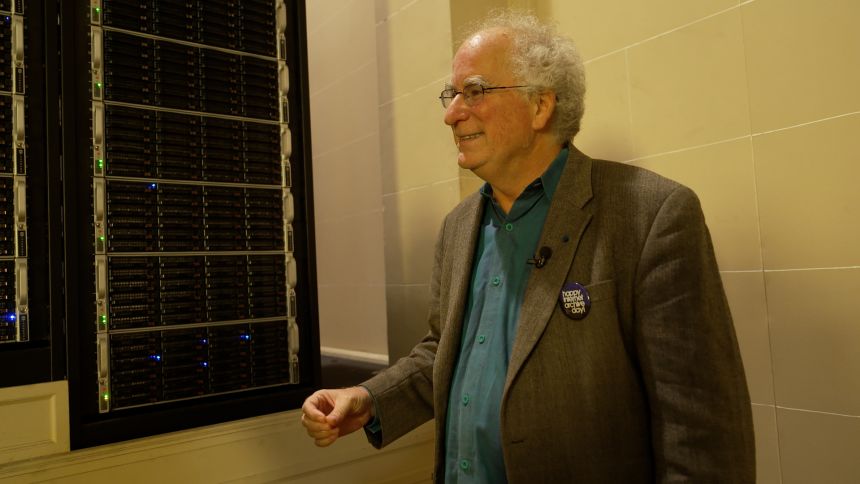
Inside the stained-glass-adorned sanctuary, the sounds of church sermons have been replaced by the hum of servers, where the Internet Archive’s Wayback Machine preserves web pages. 

 The Wayback Machine, a tool used by millions every day, has proven critical for academics and journalists searching for historical information on what corporations, people and governments have published online in the past, long after their websites have been updated or changed.

For many, the Wayback Machine is like a living history of the internet, and it just logged its trillionth page last month.

Archiving the web is more important and more challenging than ever before. The White House in January ordered vast amounts of government webpages to be taken down. Meanwhile, artificial intelligence is blurring the line between what’s real and what’s artificially generated — in some ways replacing the need to visit websites entirely. And more of the internet is now hidden behind paywalls or tucked in conversations with AI chatbots

 It’s the Internet Archive’s job to figure out how to preserve it all.

 “We are here to try to provide a record of what happened, so that people can learn and build on that to build a better future, or to build new ideas that are worthy of being in the (Internet Archive’s) library,” said Internet Archive founder Brewster Kahle.

The internet’s library

Kahle created the archive in 1996 when a year’s worth of saved pages could fit on about 2 terabytes worth of hard drives, the amount of storage you can get today in an iPhone. Now, the archive is saving closer to 150 terabytes, or hundreds of millions worth of web pages, per day.

Kahle is the driving force and personality behind the archive, with the exuberance and energy of your favorite science teacher and like an evangelist whose religion is libraries and technology. Sitting for an interview on the original wooden pews of the church, Kahle said he was inspired to purchase the building because it resembles the group’s logo. But more importantly, he said it’s a symbol of permanence and a reference to the Library of Alexandria in Egypt. 

 “That was the first time somebody tried to go and collect everything ever written by humans,” Kahle said. “Of course, now that place is the internet, and the Internet Archive serves the whole internet as a library.” 

 The Wayback Machine tool does more than just screenshot the page. It also saves the technical architecture — the HTML, CSS, JavaScript codes and more — so that it can attempt to “replay the page as it existed” even if the server is no longer functioning, said Wayback Machine Director Mark Graham.

The rise of artificial intelligence and AI chatbots means the Internet Archive is changing how it records the history of the internet. In addition to web pages, the Internet Archive now captures AI-generated content, like ChatGPT answers and those summaries that appear at the top of Google search results. 

 The Internet Archive team, which is made up of librarians and software engineers, are experimenting with ways to preserve how people get their news from chatbots by coming up with hundreds of questions and prompts each day based on the news, and recording both the queries and outputs, Graham said.

The group keeps copies of its archive in locations around the world in the event of a fire or flood that could damage its servers. But there are political considerations behind this approach, as well. The Trump administration has exerted pressure over content it disagrees with by filing lawsuits against media companies or by way of the Federal Communications Commission. 


“Libraries are always targeted. The new guys often don’t like the old stuff around. So let’s design for it,” Kahle said. “Let’s go and live up to the moment and make it so that there’s different points of view stored and made permanently accessible in different environments.”

The Trump administration implemented a massive overhaul of government websites that included taking down countless pages on everything from health policies to the achievements of minority members of the military. It was the archive, which has been saving webpages during the transition of presidential administration websites since 2004, which enabled journalists to understand what had been altered. 


Ext Building 2 .Still016.jpg
See inside the old San Francisco church that houses nearly all of the internet's history
4:03
San Francisco  — 

Just blocks from the Presidio of San Francisco, the national park at the base of the Golden Gate Bridge, stands a gleaming white building, its façade adorned with eight striking gothic columns.

But what was once the home of a Christian Scientist church, is now the holy grail of Internet history — the Internet Archive, a non-profit library run by a group of software engineers and librarians, who for nearly 30 years have been saving the web one page at a time.

Inside the stained-glass-adorned sanctuary, the sounds of church sermons have been replaced by the hum of servers, where the Internet Archive’s Wayback Machine preserves web pages.

ADVERTISING

The Wayback Machine, a tool used by millions every day, has proven critical for academics and journalists searching for historical information on what corporations, people and governments have published online in the past, long after their websites have been updated or changed.

For many, the Wayback Machine is like a living history of the internet, and it just logged its trillionth page last month.

Archiving the web is more important and more challenging than ever before. The White House in January ordered vast amounts of government webpages to be taken down. Meanwhile, artificial intelligence is blurring the line between what’s real and what’s artificially generated — in some ways replacing the need to visit websites entirely. And more of the internet is now hidden behind paywalls or tucked in conversations with AI chatbots.

It’s the Internet Archive’s job to figure out how to preserve it all.

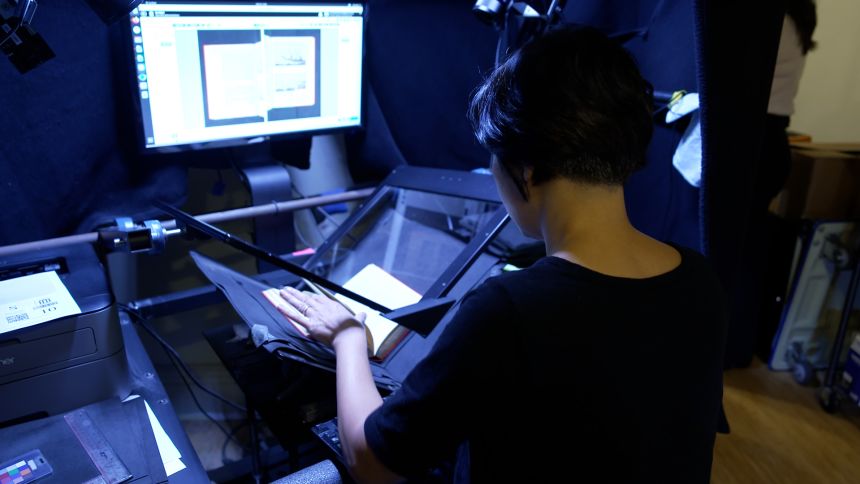
The Internet Archive also preserves music, television, newspapers, videogames and books, which archivists digitize page by page using bespoke machines.

“We are here to try to provide a record of what happened, so that people can learn and build on that to build a better future, or to build new ideas that are worthy of being in the (Internet Archive’s) library,” said Internet Archive founder Brewster Kahle.

The internet’s library

Kahle created the archive in 1996 when a year’s worth of saved pages could fit on about 2 terabytes worth of hard drives, the amount of storage you can get today in an iPhone. Now, the archive is saving closer to 150 terabytes, or hundreds of millions worth of web pages, per day.

Kahle is the driving force and personality behind the archive, with the exuberance and energy of your favorite science teacher and like an evangelist whose religion is libraries and technology. Sitting for an interview on the original wooden pews of the church, Kahle said he was inspired to purchase the building because it resembles the group’s logo. But more importantly, he said it’s a symbol of permanence and a reference to the Library of Alexandria in Egypt.

“That was the first time somebody tried to go and collect everything ever written by humans,” Kahle said. “Of course, now that place is the internet, and the Internet Archive serves the whole internet as a library.”

Brewster Kahle created the archive in 1996 when a year’s worth of saved pages could fit on about 2 terabytes worth of hard drives, the amount of storage you can get today in an iPhone.

The Wayback Machine tool does more than just screenshot the page. It also saves the technical architecture — the HTML, CSS, JavaScript codes and more — so that it can attempt to “replay the page as it existed” even if the server is no longer functioning, said Wayback Machine Director Mark Graham.

The rise of artificial intelligence and AI chatbots means the Internet Archive is changing how it records the history of the internet. In addition to web pages, the Internet Archive now captures AI-generated content, like ChatGPT answers and those summaries that appear at the top of Google search results.

The Internet Archive team, which is made up of librarians and software engineers, are experimenting with ways to preserve how people get their news from chatbots by coming up with hundreds of questions and prompts each day based on the news, and recording both the queries and outputs, Graham said.

The group keeps copies of its archive in locations around the world in the event of a fire or flood that could damage its servers. But there are political considerations behind this approach, as well. The Trump administration has exerted pressure over content it disagrees with by filing lawsuits against media companies or by way of the Federal Communications Commission.

“Libraries are always targeted. The new guys often don’t like the old stuff around. So let’s design for it,” Kahle said. “Let’s go and live up to the moment and make it so that there’s different points of view stored and made permanently accessible in different environments.”

The Trump administration implemented a massive overhaul of government websites that included taking down countless pages on everything from health policies to the achievements of minority members of the military. It was the archive, which has been saving webpages during the transition of presidential administration websites since 2004, which enabled journalists to understand what had been altered.

“This change was huge. Whole sections of the web came down,” Kahle said. “(The administration) has a new point of view, and that’s why we have libraries to go and have the record.”

The people preserving the web

Most of the archive’s servers live in a large warehouse outside of San Francisco, although a set of servers have been symbolically placed in the main sanctuary of the former church. That placement is intentional, said Kahle. By displaying the servers, he hopes “that people understand that we’re all part of the collective protection for our knowledge.”

The headquarters is an homage to the work of the Internet Archive’s 200 staff members, which include engineers, librarians and archivists. 


Archivists use bespoke machines to digitize books page by page, livestreaming their work on YouTube for all to see (alongside some lo-fi music). Record players churn out vintage tunes from 1920s and 1940s, and the building houses every type of media console for any type of content imaginable, from microfilm, to CDs and satellite television. (The Internet Archive preserves music, television, books and video games, too).

The former church’s main sanctuary also boasts more than 100 three-foot statues of employees who have been on staff for at least three years – a reference to the famous Chinese terracotta army from thousands of years ago. 

 In some ways, the space captures the quirkiness -— and community — of the internet itself.

“There are a lot of people that are just passionate about the cause. There’s a cyberpunk atmosphere,” Annie Rauwerda, a Wikipedia editor and social media influencer, said at a party thrown at the Internet Archive’s headquarters to celebrate reaching a trillion pages “The internet (feels) quite corporate when I use it a lot these days, but you wouldn’t know from the people here.” 

 The headquarters might feel something like a living history exhibit. But the Internet Archive’s goal, says Kahle, is to preserve the web so that it can continue to have a future, not to be the arbiters of truth.

“It’s not a presentation. It’s not a museum that has a story,” he said. “It’s trying to be a resource to make it so that other people can come up with their own ideas.”


Disaster and insurance costs are rising. The middle class is struggling to hang on by Michael Copley , Ryan Kellman


Three years after Hurricane Ian slammed into Fort Myers Beach, jackhammers still echo along the barrier island's main road, where new houses and businesses are going up next to vacant lots and the shells of buildings gutted by the storm.

"We are nowhere near where we thought we would be three years ago today," says Jacki Liszak, chief executive of the Fort Myers Beach Chamber of Commerce, who owned a small hotel that the hurricane washed away. "I don't think we understood what happened to us — the extent of it."

 The town emerging from the storm's aftermath could be out of reach financially for many who called it home before. Sky-high costs for construction and property insurance now threaten to squeeze out a lot of the family-run hotels that characterized Fort Myers Beach. And there's little hope that the store clerks and bartenders who once lived there will be able to afford it anymore. In their place, a lot of locals expect more big resorts and expensive homes fortified against hurricanes.

 "That gentrification is a real thing, the change in the cost is a real thing," says Rob Fowler, president of Fowler Construction & Development, a local builder. "And it all adds up to the fact that only well-heeled players can play now."

 The changes unfolding in Fort Myers Beach are an extreme version of what's happening throughout southwest Florida. Older, wealthier people have been flocking to the region for years. That fueled an affordable housing crisis, which was amplified by Hurricane Ian. Rising prices for home and flood insurance have added to the problem, leaving working- and middle-class families struggling with the costs of living in a disaster-prone area, according to Realtors.

 The challenges Florida faces, heightened by a warming planet, are playing out nationwide. Home insurance premiums across the United States have been increasing, in part because climate change contributes to more-intense storms, floods and wildfires that damage and destroy property.

 Higher insurance rates can end up affecting entire towns. In southwest Florida, rising insurance costs have started to depress home values, which can drive down property-tax revenue to local governments. As property values fall, communities around the U.S. could face a "long-lasting economic shock," says David Burt, chief executive of DeltaTerra Capital, an investment research and consulting firm focused on climate risks.


Ian fast-tracked changes in a Florida beach town

Fort Myers Beach was already growing unaffordable by the time Hurricane Ian made landfall in September 2022 with 155 mile-per-hour winds and a 15-foot storm surge.

 Months earlier, Shelton Weeks, director of the Lucas Institute for Real Estate Development & Finance at Florida Gulf Coast University, had given a talk at the town's chamber of commerce. Businesses were worried. Their workers were leaving the island because older houses were being renovated or torn down, and more expensive dwellings took their place.


"Then, Ian basically hit the fast-forward button on all of that for us," Weeks says.

The hurricane damaged or destroyed most of the buildings in Fort Myers Beach. Overnight, homeowners and businesses faced a decision: How to rebuild to meet more stringent state building codes

 Then, soon after Ian, the Federal Emergency Management Agency revised flood maps for Lee County, where Fort Myers Beach is located. Most coastal properties were reclassified into higher-hazard flood zones, says Fowler, the local builder. That meant rebuilding would have to meet tougher federal standards, too, like elevating structures above expected flood levels.


Homeowners are losing their insurance nationwide

Insurance companies are dropping customers in increasing numbers, as costs rise from disasters like hail storms, hurricanes and wildfires. In some places, homeowners can find coverage through other companies, but in others, they’re going without insurance or are turning to state-mandated insurance plans of last-resort, which are often more expensiv

 Taken together, the stricter state and federal standards have added to the town's affordability problems. "There's good to it," Fowler says. "The stuff we build today is going to be that much more resilient than what we had before. The problem is it just costs a lot of money, and it takes a lot of time."

Liszak, the chamber of commerce leader, says rebuilding her five-room hotel, The Sea Gypsy Inn, would have cost as much as $4 million after Hurricane Ian. "The numbers don't work," she says, adding: "All of the boutique hotels that are on the island that were washed away, they're all in that same boat."


Realtors warn foreclosures are looming

Hurricane Ian also added fuel to Florida's home-insurance crisis, and that's making housing even more expensive. Karen Rodriguez, an executive at Habitat for Humanity of Lee and Hendry Counties, says home insurance quotes more than doubled after the storm.

 The average cost of homeowners insurance in Florida this year is more than $5,700, according to Bankrate. That's more than any state except Nebraska and Louisiana, and about $3,350 above the national average.

Flood insurance is another big expense. Along Florida's coasts, many people live in high-risk flood zones where mortgage lenders require flood coverage. Most people who have flood insurance buy it through FEMA's National Flood Insurance Program. Several years ago, FEMA began overhauling how the flood program sets its prices to better reflect risk at individual properties. As a result, the cost of federal flood insurance is surging in some places.

 Several miles inland from Fort Myers Beach, Jessica Gatewood is seeing the impact of rising insurance costs in her real estate business.


One of Gatewood's clients recently sold her house after the cost of home and flood insurance climbed to about $10,000 a year. The house filled up with about five feet of water during Hurricane Ian. After it was repaired, the house took on several inches of water again last year during hurricanes Milton and Helene. Gatewood says her client was only able to sell after she spent about $20,000 on flood gates, which can rise automatically to block water from getting into buildings.

"That whole neighborhood, which probably has 200 homes, everybody's in the same boat," Gatewood says.

With so many homeowners trying to escape crushing insurance bills and the perennial threat of disaster, Gatewood says home sales in the area have slowed. In Lee County in October, the median length of time that homes were on the market was 87 days, a 26% increase from a year earlier, according to Redfin, a real estate website.


That leaves homeowners with unaffordable insurance in a precarious spot.

"Right now, the majority of what I see is that they're pinching every penny to pay that mortgage every month," Gatewood says. "If this economy continues on like it is for another year, yeah, for sure, we're going to have a lot of foreclosures."

While homeowners scrape by, the value of a lot of their houses is falling. In October, the average home value in Lee County was down more than 10% from a year earlier and more than 16% lower than in August 2022, the month before Hurricane Ian hit, according to the real estate website Zillow. Rising insurance costs seem to be driving the decline in home values, says Weeks of Florida Gulf Coast University.


'Little by little, you're going to see everybody going away'

Renters are getting pinched, too, as landlords pass along some of the increased costs they're paying for property insurance.


Melyssa Caballero moved to Lee County in 2022 when she was priced out of Miami. Since then, rent for the one-bedroom apartment she shares with her husband has more than doubled. Unable to save, Caballero says she's thinking of leaving Florida after watching her niece move away a couple years ago and find cheaper housing in Ohio.

"Little by little, you're going to see everybody going away," says Caballero, the office administrator at a church in Fort Myers, about 13 miles northeast of Fort Myers Beach. "Anybody that doesn't have that money — enough to be able to pay rent — people are going to have to move."

  In its latest migration report, the Florida Chamber of Commerce said almost 511,000 people moved out of the state in 2023, the most ever. About a quarter of those who left were between the ages of 20 and 29 — young workers who are critical for a growing economy.

High housing costs were the main reason people moved away, the chamber said.

Robert Gordon, a senior vice president at American Property Casualty Insurance Association, an industry group, says Florida was plagued in recent years by "legal system abuse" as homeowners and contractors tried to make insurers replace functioning roofs after storms. Insurers have faced similar cases of what Gordon describes as "fraud" in other states, which he says has contributed to rising costs.

After Florida lawmakers took steps to limit insurance litigation, the average rate for homeowners insurance in the state rose by 1% this year — the smallest increase nationwide, Gordon says.

But the underlying risks are still there. "We've seen more people moving into coastal [areas], building bigger, more expensive buildings. We've seen the climate severity increase," Gordon says. "So all of those are going to add to the insurance costs."

 Racing to rebuild before the next storm

At Fort Myers Beach in October, Dixie Fish Co. was packed at dinnertime. Another restaurant bustled with staff preparing to reopen. Construction workers pulled apart a crumbling building. As the sun set, people lounged on the beach, some perched on pilings of the town's broken pier. A couple danced in a plaza nearby.

 "I still think that this island is going to come back," says Scott Safford, a town councilman who's married to Jacki Liszak, the head of the chamber of commerce. "And the guys that are investing now, that are stakeholders now, are going to reap the rewards."


Still, a lot of Safford's friends have given up and moved inland, or back to North Carolina or Wisconsin or wherever home was before. He worries the mom-and-pop businesses won't come back, and that more national chain brands will move in, like Starbucks and the Margaritaville resort that opened a couple years ago with hundreds of guest rooms.

Safford knows, though, that the town needs investment.


I'm worried about our financial feasibility long term," Safford says, leaning back in a chair at his vacation-rental company. The sign that used to hang at The Sea Gypsy Inn is propped against a wall. "We're going to need development to sustain the tax base."

The town also needs some luck with the weather. At a waterfront restaurant, Liszak says she's scared another big storm will come before they're ready.

"That will chase away all the investors, that will chase away the people who do want to come and live here for their little piece of paradise," Liszak says. "And that will economically set us back another five to 10 years."