Thursday, October 9, 2025

SNAP cuts in the One Big Beautiful Bill Act will significantly impair recession response BY Lauren Bauer and Diane Whitmore Schanzenbach


In this piece, we analyze how changes to the Supplemental Nutrition Assistance Program (SNAP; formerly the Food Stamp Program) that are now law due to the One Big Beautiful Bill Act (OBBBA) will affect the program’s response to recessions. At a time of significant uncertainty about the direction of the economy, OBBBA makes structural changes to SNAP that we find will result in the program being substantially and detrimentally less responsive to deteriorating or poor economic conditions. Unless OBBBA’s SNAP cuts are reversed, those cuts will greatly diminish or end SNAP’s critical role as a national automatic stabilizer.

Economic recessions result in widespread pain: an increased likelihood of job loss, longer unemployment spells, less access to credit, financial stress, business closures, reduced tax revenues, and lower economic growth. Not all economic downturns are nationwide; they can be local or regional due to factors such as the decline of a regional economic sector, plant closures, or natural disasters. When there is a recession, policymakers can employ a range of fiscal and monetary policy tools to address hardship and temper the depth and duration of the downturn; but, it takes time to recognize that a recession has started, then it takes time to put together and pass pertinent legislation or adjust monetary policy, and then it takes time for resources to hit the ground.

As economic conditions deteriorate, some policies—often referred to as automatic stabilizers—do not require any policymaker action at all to kick in. Historically, SNAP has been a key automatic stabilizer because when people lose their jobs or experience a decline in income and become newly eligible for SNAP, they can enroll in the program and quickly receive and spend benefits at grocery stores. SNAP not only helps to provide a basic need, resources to put food on the table, but because recipients spend the benefits immediately in their local communities, the program also helps stabilize and stimulate the economy. These dynamics are temporary: As economic conditions improve and need dissipates, SNAP enrollment and attendant spending declines.

The policy change under OBBBA that will most severely undercut SNAP’s role in fighting recessions is the transfer, for the first time, of significant program costs from the federal government onto states. We expect that changing the structure of SNAP by ending guaranteed full federal funding of program benefits, as OBBBA does, will almost certainly lead some states to cut SNAP participation substantially and is likely to lead other states to end their participation in the program entirely. This post-OBBBA dynamic will worsen as economic conditions deteriorate: Nearly all states must balance their budgets even in recessions, when their revenues are declining, and will feel pressures to cut SNAP. As a result, instead of expanding during recessions in tandem with the economy’s contraction, SNAP is likely to contract, too, causing the economy to weaken still further.

OBBBA also changes SNAP work requirement policy, undermining SNAP’s role both in providing support for workers who lose their jobs and in stimulating local economies experiencing job loss during economic downturns. Older Americans between the ages of 55 and 64 and parents without children under age 14, both without a proven work-limiting disability, will be newly subject to time limit work requirements alongside people between the ages of 18 and 54 without dependents or a proven work-limiting disability. OBBBA ended exemptions from time limit work requirements for veterans, those experiencing homelessness, and former foster care youth.

Additionally, OBBBA severely curtails states’ ability to request waivers from time limit work requirements when local economies are struggling by limiting waivers to areas with unemployment rates of at least 10 percent, an employment level well above that experienced in many parts of the country even in deep recessions. USDA will terminate all existing waivers on November 2, 2025. Conditioning SNAP eligibility on work when the economy contracts and/or labor market conditions are poor will penalize workers who have recently lost their jobs or income, making it harder for them to get back on their feet and back to work.

The Hamilton Project has produced extensive research on countercyclical policy and commissioned dozens of policy proposals about how to best combat recessions, including the volumes Recession Ready and Recession Remedies. Delivering timely, targeted, and temporary resources to those most in need and most likely to spend those resources quickly through automatic stabilizer programs like SNAP is critical to making a recession more shallow and shorter. Policymakers could pursue a different course, reforming SNAP to be even more effective, both in general and in responding to recessions.

For example, we have proposed that a temporary increase in federally funded SNAP benefits should automatically kick in when the economy contracts, as should a nationwide suspension of SNAP work requirements. Such policies, which are similar to those Congress enacted during the last two recessions, would protect Americans from some of the hardship that comes with a recession, break the relationship between work and program eligibility when there are many fewer jobs available, and stimulate the economy during recessions by targeting resources that will be spent quickly to those in need. However, these countercyclical SNAP policies, as well as Congress’ response during the Great Recession and the COVID-19 recession, reflect SNAP prior to OBBBA.

The best policy response to the SNAP changes in OBBBA is for Congress to undo the SNAP changes in OBBBA.

Short of that, Congress should prioritize annulling the structural change that pushes a portion of SNAP benefit costs onto states before it takes effect. Congress and the U.S. Department of Agriculture (USDA) should also consider reinstating the prior criteria for SNAP work requirements and waivers of those requirements, or at a minimum, reconciling SNAP work requirement waiver rules with the new Medicaid work requirement waiver rules in OBBBA, as they differ in important ways without any justification being provided for the divergence (other than the need for the congressional committees that wrote OBBBA to meet steep, pre-set spending-cut targets). In addition, while we believe that the evidence supports ending SNAP time limit work requirements in policy and practice, Congress should at least repeat past precedent by suspending time limit work requirements nationwide when there is a recession.

Monday, October 6, 2025

BBC finds Russian guards, Iranian trucks and rusting railway on Trump's Caucasus peace route Grigor AtanesianBBC News Russian in Syunik, Armenia


An abandoned station, a few rusted carriages and a dozen metres of track are all that is left of a Soviet railway in southern Armenia.

It may seem unlikely, but this derelict stretch of track in the South Caucasus has been tapped to become a symbol of peace brokered by the US president, on the Trump Route for International Peace and Prosperity, or Tripp.

Scattered around are fragments of a head from a monument to a communist hero. A female statue is missing an arm.

"We are on the Trump route, also known as Crossroads of Peace, the Silk Road, and the Zangezur Corridor," says Marut Vanyan, a local journalist. "But so far none of this looks American."

This is one of the "unendable wars" Trump claims to have brought to an end, in an agreement between Armenia and its long-time enemy Azerbaijan.

The plan envisages US companies moving in under a 99-year deal to develop the 43km (26-mile) route through Armenian territory along its entire border with Iran, in a corridor linking Azerbaijan to its exclave of Nakhchivan. 


A railway, motorway and pipelines are all promised and Trump has spoken of companies spending "a lot of money, which will economically benefit all three of our nations".

On the ground, the scale of the challenge is clear. This transport link will have to be built from scratch, but political hurdles far outweigh economic issues.

Trump's intervention could reshape the geopolitics of a region that Russia claims as its sphere of influence. Hardliners in Tehran are also worried and are threatening to block the project.

War and peace in the Caucasus

The Tripp proposal is key to ending a conflict between Armenia and Azerbaijan that started over Nagorno-Karabakh, a part of Azerbaijan historically populated by Armenians.

In 2023, Azerbaijan recaptured the disputed region, and virtually the entire Armenian population fled their homes. This was not the first such expulsion in this conflict: in the 1990s over 500,000 Azerbaijanis were displaced.

Vanyan was among those who fled their homes in 2023.

Having escaped the war zone, he settled in Armenia's southern province of Syunik just when it became a new hotspot between the two neighbours.

Azerbaijan demanded that Armenia give part of this region as a "corridor" to its exclave of Nakhchivan. The region is also known as Zangezur, and the proposal was branded the "Zangezur corridor".

But when Armenia rejected the demand, clashes erupted on the border, and many feared a new war.

Then, in August 2025, Trump unexpectedly broke the deadlock. Hosting Azerbaijan's President Ilham Aliyev and Armenian Prime Minister Nikol Pashinyan at the White House, he offered a solution designed to satisfy both sides.


A future Trump route promises both "unimpeded connectivity" for Azerbaijan and "full respect" for Armenia's sovereignty. The route will be managed by a private US company.

Both nations' leaders say the Washington meeting has restored peace in their region and praise Trump's intervention as a game changer.

But the document they signed is thin on detail and offers no timeline for the Tripp to be built.

Crossroads for Western, Russian and Iranian interests

US mediation became possible because of Russia's weakened position in the South Caucasus.

For years, the Kremlin worked towards re-opening the route that now bears an American president's name.

And although Russia's proposal for its FSB border troops to guard the future road has been rejected, they still patrol the stretch of the Armenia‑Iran border that has been chosen for the Trump route.

As the BBC filmed on the ground, a Russian FSB patrol vehicle pulled up in front of us. A young man in uniform asked us about a drone filming the border from above. We said it was not ours and the Russian patrol moved on.

Armenia's Syunik region is also a key hub for its exports, and businessmen and trucks from Iran are a familiar sight. Iranian construction companies are building a new bridge that will cross the future Tripp.

The Aras River that separates the Islamic Republic and Armenia is the very line the route is set follow.

It is unclear how the US and Iranian companies will co-exist in Armenia, given recent US involvement in the Israel‑Iran war.

A senior adviser to Iran's supreme leader threatened to turn Tripp into "a grave for Donald Trump's mercenaries", but Iran's government has been more measured.

Iran is a friend and neighbour to both Caucasus nations and Armenia has told Tehran the project is not a threat to its interests. 


There is also increased European presence in southern Armenia.

France has recently started selling weapons to Yerevan and has opened a consulate in Syunik. An EU monitoring mission is deployed to the region, and the future Trump route is seen by the EU as part of a "middle corridor" linking it with Central Asia and China and bypassing Russia.

Turkey is also eager to benefit from an opening created by waning Russian influence.

Ankara is in talks with Armenia to normalise relations and has voiced support for Tripp, which would create a direct link from Turkey to Azerbaijan through its exclave.

Armenia's government appears calm about the various competing interests. It wants to become a "Crossroads of Peace" where all regional powers will co-operate.

"They say everything will be fine and that there will be billions of euros of investment, new roads and trade with Iran, America, Europe, Turkey and Azerbaijan," Marut Vanyan says with an incredulous smile.

A formal peace treaty between Azerbaijan and Armenia has not yet been signed, but one thing is clear: since the Washington meeting, not a single shot has been fired on the Armenia-Azerbaijan border.

Trump's intervention has brought at least temporary relief to those who for years have lived in fear of renewed fighting.


GOP Falsely Ties Shutdown to Democrats’ Alleged Drive To Give All Immigrants Health Care By Maria Ramirez Uribe, PolitiFact


“Democrats are threatening to shut down the entire government because they want to give hundreds of billions of dollars of health care benefits to illegal aliens.”

Vice President JD Vance in a Sept. 28, 2025, Fox News interview

 Democrats of forcing the closure because they want to give health care access to immigrants in the U.S. illegally.


“Democrats are threatening to shut down the entire government because they want to give hundreds of billions of dollars of health care benefits to illegal aliens,” Vice President JD Vance said Sept. 28 on “Fox News Sunday.”

President Donald Trump, House Speaker Mike Johnson, and Republican members of Congress have repeated this line.

It’s wrong.

Democrats have refused to vote for Republicans’ resolution to extend the federal spending deadline, and their position does, in part, hinge on health care spending. Democrats want to extend covid pandemic-era Affordable Care Act subsidies that are set to expire at the end of the year and roll back Medicaid cuts in the tax and spending bill that Trump signed into law this summer. 

The Democrats’ proposal wouldn’t give health care to immigrants who lack legal status; that population is already largely ineligible for federally funded health care. Instead, the proposal would restore access to certain health care programs for legally present immigrants who will lose access under the Republican law.

The White House did not respond to PolitiFact’s request for comment for this fact check. Vance addressed criticism of his talking point in another interview by saying it was included in the Democrats’ spending proposal. It’s not.

A White House X account followed up with screenshots of the Democratic proposal repealing a section of the Republican law labeled “alien Medicaid eligibility.” It’s important to know that these changes would not give Medicaid access to immigrants who lack lawful status.

Vance defended his statement again in an Oct. 1 White House press conference, saying former President Joe Biden “waived away illegal immigration status” that helped migrants access federal assistance. It’s important to note that many people granted lawful status through humanitarian parole or Temporary Protected Status programs don’t automatically qualify for Medicaid; TPS recipients aren’t eligible, and many people who entered the U.S. on humanitarian parole are required to wait five years before accessing it.

The Trump administration has ended humanitarian parole and Temporary Protected Status for many people, rendering them ineligible for Medicaid and health plans on the Affordable Care Act marketplace.

We did not find evidence that Democrats want to spend “hundreds of billions” in costs for insuring migrants with unlawful presence.


Immigrants Lacking Legal Status Are Already Ineligible

Most federal health care dollars cannot be spent on health care for people in the U.S. who lack legal status. They cannot enroll in Medicaid or Medicare, and they are ineligible to purchase health care coverage through the Affordable Care Act marketplace. A small Medicaid program reimburses hospitals for uninsured emergency care, which can include immigrants in the country without authorization but is not exclusive to them.

States such as California and Illinois expanded Medicaid coverage for people regardless of their immigration status, and the states pay for that. Federal law already banned states from using federal money for these programs. An earlier version of the Republican spending law would have penalized such states by withholding funding, but that provision didn’t last.

People in the country without permission might receive some federally funded health care in emergency cases; in those situations, hospitals must provide care even if a person is uninsured or in the country illegally. Emergency Medicaid covers hospital care for immigrants who would be eligible for Medicaid if not for their immigration status. The Republican tax and spending law reduced the amount hospitals can receive for emergency immigrant care.

Most Emergency Medicaid spending is used on childbirth. In all, it represented less than 1% of total Medicaid spending in fiscal year 2023, according to KFF, a health information nonprofit that includes KFF Health News.

GOP Law Limited Care Access for Immigrants With Legal Status

The Republican tax and spending law made several changes to health care eligibility for immigrants living in the country with permission. An estimated 1.4 million legal immigrants are expected to lose their health insurance, according to a KFF analysis of Congressional Budget Office projections. 

Starting October 2026, the law will restrict eligibility for Medicaid and the Children’s Health Insurance Program to lawfully permanent residents, people from the Marshall Islands, Micronesia, or Palau who lawfully reside in the U.S. under an international agreement, and certain Cubans and Haitians.

Previously, a broad group, described as “qualified noncitizens,” was eligible for Medicaid and its related Children’s Health Insurance Program, known as CHIP, including refugees and people granted asylum.

Some immigrants eligible for Medicaid and CHIP, such as lawful permanent residents, are required to wait five years before accessing the benefits. 

The law also limited Affordable Care Act marketplace eligibility to the same group eligible for Medicaid and CHIP beginning Jan. 1, 2027. Previously, people who were described as “lawfully present” were eligible. That group included the “qualified noncitizens” eligible for Medicaid and people with short-term statuses, such as Temporary Protected Status or international students.

Beneficiaries of the Deferred Action for Childhood Arrivals program, known as DACA, for immigrants who entered the U.S. without authorization as children were previously eligible for Affordable Care Act coverage and its subsidies. They are ineligible since a Trump administration rule took effect in August.

Democrats’ Proposal Would Restore Legal Immigrants’ Access

The Democrats’ Sept. 17 budget proposal would, in part, permanently extend the Affordable Care Act subsidies and roll back billions in Republican cuts to Medicaid and other health programs. 

The change would make Medicaid, CHIP, and Affordable Care Act coverage available to all legal immigrants who were previously eligible for it, such as refugees and people granted asylum.

The Democratic proposal would not broaden eligibility to federally funded health care programs to immigrants lacking legal status.

Vance said the Democratic policies would “give hundreds of billions of dollars of health care benefits to illegal aliens,” and the White House did not offer its source for that figure. When Johnson was pressed to support a similar talking point, he referenced the Congressional Budget Office. The KFF analysis of CBO estimates found that the Republican law’s provisions related to legal immigrants would reduce federal spending by $131 billion; this projection did not include an estimate for people without legal status.

Our Ruling

Vance said, “Democrats are threatening to shut down the entire government because they want to give hundreds of billions of dollars of health care benefits to illegal aliens.”

Immigrants in the U.S. illegally are largely ineligible for the federally funded health care programs Medicare and Medicaid, and they cannot seek coverage in the Affordable Care Act marketplace or apply for subsidies.

The Democrats’ budget proposal would not change that.

The Democrats want to restore access to certain health care programs to legal immigrants who will lose access under the Republican tax and spending law — among other measures aimed at making Medicaid and Affordable Care Act insurance plans easier to keep. 

Their proposal would not grant federally supported health care benefits to people in the U.S. illegally, because they did not have access to them in the first place. The small amount of funding designated for Emergency Medicaid reimburses hospitals that provide emergency care to immigrants who would be eligible for Medicaid if not for their immigration status. Finally, we did not find evidence for Vance’s assertion that Democrats want “hundreds of billions” in health benefits for migrants in the country illegally. 

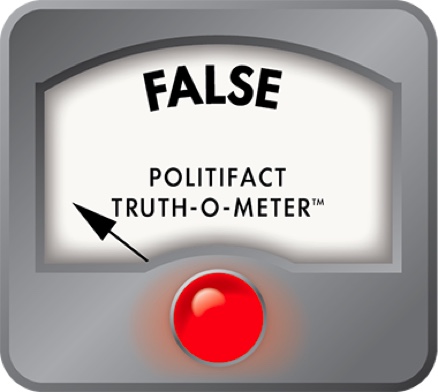
We rate the statement False.

Thursday, October 2, 2025

Trump administration cuts nearly $8B in clean energy projects in blue states by MICHAEL PHILLIS and MATTHEW DALY


WASHINGTON (AP) — The Trump administration is cancelling $7.6 billion in grants that supported hundreds of clean energy projects in 16 states, all of which voted for Democrat Kamala Harris in last year’s presidential election.

The cuts were announced in a social media post late Wednesday by Russell Vought, the White House budget director: “Nearly $8 billion in Green New Scam funding to fuel the Left’s climate agenda is being cancelled.”

The move comes as President Donald Trump threatens cuts and firings in his fight with congressional Democrats over the federal government shutdown.

These cuts are likely to affect battery plants, hydrogen technology projects, upgrades to the electric grid and carbon-capture efforts, among many others, according to the environmental nonprofit Natural Resources Defense Council.

The Energy Department said in a statement Thursday that 223 projects were terminated after a review determined they did not adequately advance the nation’s energy needs or were not economically viable. Officials did not provide details about which projects are being cut, but said funding came from the Office of Clean Energy Demonstrations, Office of Energy Efficiency and Renewable Energy, and other DOE bureaus.

Pope Leo XIV says 'inhuman treatment of immigrants' in the U.S. isn't 'pro-life By Claire Giangrave , Daniel Burke


VATICAN CITY — Pope Leo XIV weighed in on U.S. politics, saying that Catholic politicians must be judged on the full range of their policy positions and suggesting that the country's treatment of immigrants is "inhuman."

"Someone who says I'm against abortion but is in favor of the death penalty is not really pro-life," Pope Leo said. "And someone who says I'm against abortion but I'm in agreement with the inhuman treatment of immigrants in the United States, I don't know if that's pro-life."

The remarks represent the first American pope's first foray as pontiff into his native country's pitched debates over abortion, immigration and the Catholic Church's role in civil society. 


White House Press Secretary Karoline Leavitt was asked about the Pope's comments on Wednesday.

"I would reject there is inhumane treatment of illegal immigrants in the United States under this administration," Leavitt told reporters at the White House. "There was, however, significant, inhumane treatment of illegal immigrants in the previous administration as they were being trafficked and raped and beaten, in many cases killed over our United States southern border."

Before he was elected Pope on May 8, Leo — then known as Cardinal Robert Prevost — shared articles on social media that were critical of the Trump administration's rhetoric and policies on immigration.

A papal press gaggle

The Pope's brief remarks came in response to questions from reporters who gathered outside of his summer residence in Castel Gandolfo on Tuesday evening.

One reporter asked the Chicago-born pontiff about the controversy over plans to honor Illinois Sen. Dick Durbin with a lifetime achievement award by a Catholic institution — despite the Illinois lawmaker's support for abortion rights.

Leo said he wasn't "very familiar with the case," but he said the award was a recognition of Durbin's "overall work" during more than 40 years of service in Congress.

"I understand the difficulty and the tensions. But I think as I myself have spoken in the past, it's important to consider many issues related to the teaching of the Church," said Leo.


The pope urged people involved in the U.S. — and his native state of Illinois — to "have respect for one another" while reminding faithful that the teaching of the Catholic Church on these issues is "very clear."

On Sept. 22, Chicago Cardinal Blase Cupich announced he would be presenting Durbin with the award at the upcoming Keep Hope Alive gala in acknowledgment of Durbin's support for migrants.

Critics, including Bishop Thomas Paprocki of Springfield, Illinois, where Durbin lives, condemned the award because of the senator's past support for abortion rights. Paprocki has denied Communion for Durbin since 2004.

Durbin, whose fifth term in the Senate ends in January of 2027, has said that he will not seek re-election.

Shortly after the pope's remarks, Cupich issued a statement announcing Durbin has declined to receive the award.

"While I am saddened by this news, I respect his decision," wrote the cardinal, who stressed that the award was in recognition of "his unwavering support of immigrants, which is so needed in our day."

Cupich also lamented the growing partisan divide within the U.S., which he said leaves Catholics "politically homeless." While church teaching bars honoring politicians who support policies contrary to Catholic doctrine, he said no leader consistently embodies Catholic social teaching.

"Total condemnation is not the way forward, for it shuts down discussion," the cardinal said.


Wednesday, October 1, 2025

‘Laughter Can’t Be Put on Trial’: Why Donald Trump Is Afraid of Jimmy Kimmel by Zoya Sheftalovich


For anyone who watched Vladimir Putin’s rise to power in the early 2000s, the Trump administration’s crackdown on Jimmy Kimmel’s late-night comedy show immediately brought to mind an incident from early in the Russian autocrat’s presidency: the forced cancelation of a popular satirical puppet show called “Kukly.”

As one of his first acts as president, Putin pressured an independent TV network to shut down the show, which mercilessly mocked Russia’s leading political players using grotesque puppets that caricatured both their features and their dirty dealings. For a few years after the collapse of the Soviet Union, Russians could tune into Kukly and laugh at their leaders. In one memorable episode, Boris Yeltsin rocks a cradle containing a demonic baby Putin and laments his role in putting him in power. Tens of millions of Russians were watching.

The comedic genius behind “Kukly” was Viktor Shenderovich, who helmed the show from 1994-2002 and gained a following akin to that of Jon Stewart — that is, if Jon Stewart also ran “The Muppet Show.” Even after the show’s cancellation (and the subsequent shuttering of the NTV network that screened it), Shenderovich continued to live and work in Russia, becoming a prominent anti-Putin critic on the radio station Ekho Moskvy. He only fled the country in December 2021, shortly before Russia’s full-scale invasion of Ukraine, after the Kremlin designated him a “foreign agent” and he faced libel charges from a Putin ally.

 Now living in Poland, Shenderovich has watched as Donald Trump’s administration has carried out an unprecedented pressure campaign on American comedians and the networks that employ them. “This is a test,” Shenderovich said in an interview with POLITICO Magazine. “Trump is acting like Putin. But he doesn’t have Putin’s resources. The only way he wins is if you surrender.”

 Shenderovich says satire remains one of the most potent tools for protecting democracy, because it reveals truths and reaches broader audiences than other forms of political speech. And he says American democracy will persevere as long as the country protects its right to laugh at its leaders.

 “Satire is the sharpest instrument of free speech. And the first thing all dictators do is crack down on freedom of speech,” Shenderovich said. “Because in a totalitarian state, you can crush the courts, you can crush elections; you can crush everything. But you can’t crush laughter.”


Vladimir Putin shut down your satirical puppet show. Donald Trump has tried to shut down a comedy show. Is Donald Trump America’s Putin?

Trump would love to be like Putin. He wants Putin’s capacity to subdue the press, the Congress, the Senate, the courts, federalism.

But they are very different, Putin and Trump. The only thing they have in common is that when they get power, they are absolutely authoritarian. But the nature of their authoritarianism is different; they are psychologically very different. Putin was born with an inferiority complex, he was a nobody who was all of a sudden elevated by circumstance. Trump has been an elite since birth. And Putin is certainly much stronger and cleverer. He is manipulating Trump, not the other way around.


Trump is much more open and brazen than Putin in his attacks on satire and criticism. Putin did not publicly voice complaints against journalists, against us; he pretended he had nothing to do with it, though of course everyone knew he was behind it all.

Trump is much more up front than Putin. He doesn’t shy away from saying explicitly that he is settling scores with his political opponents. He doesn’t hide that he is taking revenge. He’s much more open than Putin, who did all his dirty work in secret.


What’s worse, someone who settles scores openly or in secret?

It’s all bad. But open is better. That doesn’t mean Trump is better, but it is better for society to get a warning of impending danger. The American public have received a clear signal of Trump’s authoritarian tendencies, and they are responding to it.

In Putin’s case, a huge number of Russians really believed in him. So many people, even liberals, were on Putin’s side because they believed he was fighting oligarchs, that he was fighting to bring back law and order. He was helped by so many people who are now distancing themselves from him or are even on the run from him. But I remember how these people helped Putin gain a foothold in power and helped him smash an independent television station.

 Will Trump manage to bend American democracy to his will?

Trump would love to be Putin, but he won’t succeed for several reasons. Chiefly because of the American traditions of free speech, the separation of powers, the independence of the courts, elections. Trump is finite — and he isn’t just limited by how long he lives, as Putin is.

 In his 25 years in power, Putin suppressed all freedom of speech, elections, courts, access to the streets. He has completely subjugated Russia. Trump will not be able to subjugate America, this is quite obvious. This is the most important and fundamental difference.

And Jimmy Kimmel is back on the airwaves.


Trump hated it when Alec Baldwin portrayed him on Saturday Night Live. Putin despised the Putin puppet on “Kukly.” Why can’t autocrats take a joke?

Because laughter can’t be put on trial. [19th century Russian novelist and political satirist Nikolai] Gogol said that even those who fear nothing fear laughter. Because in a totalitarian state, you can crush the courts, you can crush elections; you can crush everything. But you can’t crush laughter.


If a caricature cracks people up, it’s because it rings true. It means the truth is hidden inside the joke. And it is absolutely irrefutable, laughter is a verdict. Laughter is public and obvious evidence that you are wrong, that you are ridiculous.

Satire is the sharpest instrument of free speech. And the first thing all dictators do is crack down on freedom of speech.

So does Putin have a sense of humor?

Everyone has a sense of humor. And what they do and don’t find funny paints a pretty good portrait of a person. Putin’s sense of humor characterizes him very well. What doesn’t he have? Any sense of self-irony, any ability to self-reflect — he lost it, if he ever had any, after 25 years in the sanctified air of the Kremlin. In his own eyes, he is a great Russian czar, with a messianic brain, and he is absolutely serious.

 Putin didn’t have to imprison or kill all his critics; he shut a few up, and others censored themselves. Saturday Night Live returns to U.S. television for its 51st season on Oct. 4. What advice do you have for SNL and other American performers at this moment?


You need to understand that Trump is trying to change the rules of the game, and he has the resources to do it. But you have the resources to resist. You must not allow Trump to change the rules; you must not allow the First Amendment to be repealed.

The American situation is dramatic, but it is not fatal.

You aren’t facing the kinds of dangers we faced. There were criminal cases, extra-judicial pressure, surveillance, illegal break-ins, slander, harassing phone calls, the threat of beatings, and so on. We were forced into hiding. In Putin’s Russia, journalists are killed.

American comedians don’t face these dangers, because as far as I know, the United States still has police and courts and judges and elections. Therefore, you must hold firm.

This is a test. Trump is acting like Putin. But he doesn’t have Putin’s resources. The only way he wins is if you surrender. If you lie down and take it, then yes, Trump will be able to make his new rules the norm. If you don’t, he can’t.

Don’t be afraid. What’s the worst thing that could happen?

Unemployment? I don’t think you will starve to death. You’re not in danger of death or imprisonment, or being hit on the head with a crowbar. Remember Charlie Chaplin, who left the U.S. during McCarthyism. He was forced to flee the country. But he’s still Chaplin. And those who banned him from returning — we don’t know their names. And then he won an Oscar, when the norms changed, and America gave a standing ovation to old Chaplin.


Is comedy an important tool of protest? Or is it more of a defense mechanism for people who are powerless?

In a free country, satire is a powerful weapon of freedom of speech, and therefore of public dialogue, and therefore of politics, because in a free country these are related things. Because viewers become voters.

At the time of “Kukly,” satire was part of Russian public dialogue, and I felt good about myself. When tens of millions of people watch your programs, you inevitably realize that you don’t just have an opinion, you have a voice. And this voice isn’t contained; it can be heard all over the country.

But since Putin destroyed free speech in Russia, I’ve felt like a psychotherapist. These days it’s helpful for people to hear my opinion so they can feel normal, to let them know that just because we’re outnumbered, it doesn’t mean we are wrong. The main confession I hear is this: “You said what I’ve been thinking.”

Putin — like all authoritarian leaders — does not just throw critics out of the political process; he marginalizes us. People who don’t like what he is doing, who have been criticizing Putin using whatever means they can, they are told they are crazy, they are in the minority. They’re not just jailing them and driving them out of the country. They’re telling millions of people that whoever is against Putin is against Russia.

So it’s important for a normal voice to be heard. So people understand, whether they’ve stayed in Russia or they’ve left, that just because they are in the political minority, this doesn’t mean they are crazy.


How do you live with the implicit threat hanging over you from Putin’s regime? Are you afraid?

I take it into account. I live in Poland. I am careful. Before every trip, if it’s not within Europe’s Schengen area, America, Israel or England, I consult my lawyers about whether I might be extradited. But the risks I face outside Russia are completely incomparable with what they’re doing to those who remain in Russia. People are in jail there and they are being killed. And we understand that Putin’s instruments are the tools of a murderer after what he did to [opposition leader Alexei] Navalny. So I can’t complain.


You once wrote about the “quiet, daily decline of morals” in Putin’s Russia, which allowed him to consolidate power and crush democracy. What are some of the symptoms people missed?

An attack on an independent television network.

At the time, freedom of speech had only recently appeared in Russia and had not become a sacred cow like it is in America. We never came close to a First Amendment. We just got a sudden sliver of relief; the regime loosened the shackles. But free speech was never seen as a right. So it’s understandable that people missed the symptoms — because Russian society was very immature.

You know, when NTV was destroyed 20 years ago, a lot of people said to me, “You have a problem.” “We sympathize with you.” I said, “I’m not the one with the problem. You’re the one with the problem. They won’t tell you the truth, they’ll do whatever they want to your children. Without a free press, you’re the one with problems.”

 When was it clear what Putin would become?

[Italian writer] Umberto Eco listed 14 signs of fascism. Concentration of power in one person’s hands, conservative values, reliance on the church and big capital, patriotic vocabulary, patriotic demagogy and so on. Twenty years ago, Putin’s Russia already fulfilled 11 of the 14. This was pretty obvious.


Some did not understand, and some did not want to understand. Putin got very lucky with the economy. [Osama] Bin Laden and India and China ensured the rise in oil prices, and the West chose not to see obvious signs. The West made Putin into today’s nightmare. The West had far more opportunities to stop Putin than I did, you know? [Former German Chancellor Angela] Merkel, [former French President Nicolas] Sarkozy, and [former U.S. President George W.] Bush had far more opportunities to stop Putin than Russian journalists and opposition politicians who were killed or imprisoned or thrown out of the country.

But the West chose to ignore everything and be friends with Putin. Today’s catastrophe, today’s Putin, who is absolutely convinced of his strength and that he will buy off half the West and intimidate the other half — that Putin was created by the West itself.


You once said a society, like a person, reaches a point when it passes out from pain, and then you can do anything you want to it. It becomes compliant. When was this moment in Russia?

The point after which Russian society lost consciousness from pain was probably Beslan [the 2004 school siege in which 334 people were killed, including 186 children, after Russian special forces stormed a gym where militants linked to the Chechen separatist insurgency were holding 1,100 people hostage]. Putin had a choice between accepting a political defeat [by allowing Chechen leader Aslan Maskhadov to mediate the crisis] or killing all those kids. And he chose to kill the children.


This was the moment. It seems to me that after that, the country simply lost consciousness from pain. We either needed some kind of uprising against these murderers, or to lose social consciousness. And society lost social consciousness.

That’s where the Stockholm syndrome started — people trying to reassure themselves that it couldn’t have happened that way, that everything was OK, that there was no other choice. And Stockholm syndrome is now, of course, the most obvious symptom in a Russian society that is being held hostage by Putin. Most Russians convince themselves that everything is normal and everything is fine.

What happens to a country when it can no longer laugh at its leaders?

To quote the great Polish writer StanisÅ‚aw Jerzy Lec, in places where laughter is forbidden, you’re also not allowed to cry. After Beslan, I remembered this quote. You aren’t even allowed to cry.

We see North Korea, we see Central Asian republics, we see Belarus — we know what happens in countries where laughing at the head of state is forbidden. We know how people live and how they die in these countries.

This is so obvious and has been said so many times, including by Benjamin Franklin, who said freedom of speech is the most important freedom because with it you can protect the others.

 Can America still laugh at itself?

I’m still optimistic. Because the first time I came to America exactly 30 years ago, Jon Stewart was on TV. And now, Jon Stewart is still on TV. The president has changed five, six times since then, but Jon Stewart remains. And Jon Stewart can take down the American president — it doesn’t matter which president — he can slap him down in prime time. And I am absolutely convinced that this won’t change.


Pete Hegseth had a lot to say when he summoned military leaders. Here are some facts and context By JULIE WATSON, LAURIE KELLMAN and DEEPTI HAJELA


NEW YORK (AP) — Armed with a 10-point plan and pacing a stage in Quantico, Virginia, on Tuesday, Defense Secretary Pete Hegseth enumerated for hundreds of assembled military leaders just how much of the force’s policy, philosophy and culture will change for more than 2 million Americans in uniform under President Donald Trump’s command.

“For too long, we’ve promoted too many uniformed leaders for the wrong reasons based on their race, based on gender quotas, based on historic so-called firsts,” Hegseth said. The approach, he said, made the Pentagon “less capable and less lethal.” Hegseth talked up his and Trump’s focus on “the warrior ethos” and “peace through strength.”

“No more identity months, DEI offices, dudes in dresses. No more climate change worship, no more division, distraction or gender delusions. No more debris,” he declared.


Here are some of Hegseth’s words and some context behind them:

‘The highest male standard’

WHAT HE SAID: “Any place where tried and true physical standards were altered, especially since 2015, when combat arms standards were changed to ensure females could qualify, must be returned to their original standard.”

THE BACKSTORY: It’s not clear what Hegseth meant by returning physical expectations to their “original standard.” But military culture and the role of women have changed dramatically in recent decades, and Hegseth aims to change them back.

In 2015, then-Defense Secretary Ash Carter ordered that all military jobs be open to women. That change followed three years of study and wrangling and was a formal recognition that thousands of women had served — and many were wounded or killed — on battlefields in Iraq and Afghanistan.

Carter said then that the military could no longer afford to exclude half the population from high-risk military posts and that any man or woman who meets the standards should be able to serve. Special operations forces, in surveys done in 2015 and more recently, said women lacked the physical or mental strength to serve in elite commando units and doing so could hurt the units’ effectiveness.


Hegseth said the policy will be to ensure that “every designated combat arms position returns to the highest male standard.” But he was careful to say that the policy is not an effort to block women from serving.

“When it comes to any job that requires physical power to perform in combat, those physical standards must be high and gender neutral,” he said. “If women can make it, excellent. If not, it is what it is. If that means no women qualify for some combat jobs, so be it. That is not the intent, but it could be the result.”

Jenn Bennie, an Iraq War veteran and former combat helicopter pilot, said she agrees with Hegseth’s comments. “That is the standard I upheld when I became a Navy pilot in 2001. It was a pilot standard and it benefits everyone, including women who have met that universal requirement,” she wrote in an email. “It lets everyone know that every pilot is mentally and physically combat-capable to go into warfare, putting no one under undue risk.”


‘What were the military standards in 1990?’

WHAT HE SAID: “What were the military standards in 1990? And if they have changed, tell me why. Was it a necessary change based on the evolving landscape of combat, or was the change due to a softening, weakening or gender-based pursuit of other priorities?”

THE BACKSTORY: Before 1991, women were barred by law from flying combat missions and serving on naval combat ships. Noting the performance of female pilots in the Persian Gulf War, Congress rescinded the laws in the early 1990s. By 1994, women were allowed to serve in most roles not involving direct ground combat.

Faced with the fallout of the Vietnam War and racial tensions within the ranks, the military was trying to boost recruitment numbers, said Gary Solis, a former Marine Corps prosecutor and military judge who has taught the laws of war at universities.

“It was needed and I don’t believe it weakened the military,” Solis said.

In 1991, the U.S. launched its assault on Iraqi forces in Kuwait. In purely military and political terms, the first Gulf War was a tremendous success. The U.S. held together an allied army, its war effort was supported by a number of United Nations resolutions, and the conflict cemented its position as the sole world power following the end of the Cold War and the collapse of the Soviet Union.


‘Fat troops’

WHAT HE SAID: “Frankly, it’s tiring to look out at combat formations or really any formation and see fat troops. Likewise, it’s completely unacceptable to see fat generals and admirals in the halls of the Pentagon and leading commands around the country and the world. It’s a bad look.”

THE BACKSTORY: Three-quarters of Americans aged 17 to 24 are not eligible for military service for several reasons, including extra weight. Being overweight is the biggest individual disqualifier, affecting more than 1 in 10 potential recruits, research has showed.

Some have debated whether the physical requirements demanded of service members across the board are still relevant or should be adjusted according to the job so the armed forces can maintain the pool of talent it needs for today’s high-tech warfare, while competing with higher salaries offered by the private sector.

In 2016, the Navy loosened its body fat restrictions to allow those who failed their physical fitness exams three or more times to get one more opportunity to be tested under the more lenient guidelines. The Navy said at the time it had been losing too many talented sailors. Some were resorting to liposuction, diet pills and other measures to save their careers.

Then-Navy Secretary Ray Mabus said the service was not lowering standards but rather adjusting to reality: People today, in general, are bigger but not necessarily fat.


‘Kill people and break things’

WHAT HE SAID: “You kill people and break things for a living. You are not politically correct and don’t necessarily belong always in polite society.”

THE BACKSTORY: The throughline of Hegseth’s remarks was that members of the military are there to, first and foremost, “unleash overwhelming and punishing violence on the enemy,” through continual mission training and maintaining equipment. In terms of attitude, he said he expected aggressiveness and risk-taking and turning away from what he has called a “woke” culture that he says has weakened the military.

That was why, he told the gathered military leaders, the changes being implemented would include how complaints alleging toxic leadership are dealt with, how infractions would be recorded on personnel records, and how promotions would be handled.

Since taking on the role, Hegseth has ordered significant cuts to the top military ranks and has fired several leaders, including the chairman of the Joint Chiefs of Staff, a Black general, and the woman who was the Navy’s top officer. On Tuesday, he said his reasoning for those firings was that “it’s nearly impossible to change a culture with the same people who helped create or even benefited from that culture.”

But the idea that the U.S. military isn’t well-trained and highly effective “is almost disparaging to them,” said Richard Kohn, professor emeritus of history and peace, war and defense at the University of North Carolina.

“They’ve been in combat, they’ve been adopting and adapting to very complex weapons systems. And we have very lethal armed forces,” he said. “It makes you scratch your head wondering who (Hegseth and Trump) think they’re leading when they have to give a talk like this.”


And the modern American military isn’t just about fighting; it’s about diplomacy and problem-solving. That’s why diversity and different perspectives help, said Rebecca Best, associate professor of political science at the University of Missouri at Kansas City.

“When you view the military’s purpose as just about going out guns blazing and killing people, then you might think, well, you don’t need diversity to just go out and kill people,” she said. “But you do need diversity if what you really need to do is problem-solve.”